The World Economic Forum (WEF) has released its 2025 Global Risks Report, offering a forward-looking analysis of the most pressing risks facing the world in the coming years. This year’s report highlights a deepening of many risks identified in previous years, with a particular emphasis on the interconnectedness of environmental, economic, geopolitical, and technological challenges. For the Southern African Development Community (SADC) and the broader African continent, these risks are especially pertinent, given the region’s unique vulnerabilities and ongoing struggles with poverty, inequality, and climate change.
Key Global Risks in 2025
The 2025 WEF report identifies several critical risks that are expected to shape the global landscape:
- Climate Change and Environmental Risks: Extreme weather events, biodiversity loss, and ecosystem collapse remain the most severe global risks. The report warns that the window for effective climate action is narrowing, with irreversible damage looming if global temperatures rise beyond 1.5°C.
- Economic Instability: Persistent inflation, debt crises, and economic stagnation continue to threaten global growth. Developing economies, particularly in Africa, are at risk of being left behind due to limited fiscal space and external shocks.
- Geopolitical Fragmentation: Rising geopolitical tensions, including armed conflicts and economic decoupling, are creating a more divided world. This fragmentation undermines global cooperation on critical issues like climate change and poverty reduction.
- Technological Disruptions: The rapid advancement of artificial intelligence (AI) and other technologies brings both opportunities and risks. Cybersecurity threats, misinformation, and job displacement are growing concerns.
- Social and Political Instability: Erosion of social cohesion, political polarization, and civil unrest are escalating, driven by economic hardship, inequality, and distrust in institutions.
Contextualizing the Risks for SADC and Africa
- Climate Change and Environmental Risks
Africa remains disproportionately affected by climate change, despite contributing minimally to global emissions. The SADC region, in particular, faces severe droughts, floods, and cyclones, which disrupt agriculture, water supplies, and infrastructure. For example, the 2024 Cyclone season caused widespread devastation in Mozambique and Madagascar, displacing thousands and straining already limited resources.
The 2025 WEF report emphasizes the urgent need for climate adaptation and resilience-building in Africa. This statement directed at first world countries shows that there are risks that go beyond borders. The idea of a ‘global village’ is pertinent as we see climate change where the biggest emitters of carbon are first world countries, but the impacts are felt in third world countries. However, funding remains a significant challenge. SADC countries must prioritize investments in renewable energy, sustainable agriculture, and disaster preparedness to mitigate these risks. Regional initiatives, such as the SADC Climate Change Strategy, are critical but require stronger implementation and support from the international community.
- Economic Instability
Many SADC countries are grappling with high debt levels, currency volatility, and sluggish growth. The cost-of-living crisis, driven by global inflation and supply chain disruptions, has exacerbated poverty and inequality. For instance, South Africa, the region’s largest economy, continues to face persistent energy and water shortages, which stifle economic recovery.
The 2025 report warns that debt distress could force African nations to cut essential spending on health, education, and infrastructure. To address this, SADC countries must pursue structural reforms, diversify their economies, and strengthen regional trade under the African Continental Free Trade Agreement (AfCFTA). Additionally, international debt relief initiatives are crucial to creating fiscal space for development.
- Geopolitical Fragmentation
Africa is increasingly becoming a battleground for geopolitical rivalries, with major powers vying for influence over the continent’s resources and markets. The SADC region has witnessed external interference in its political processes, as seen in the ongoing conflict over mineral resources in the Democratic Republic of Congo.
The 2025 WEF report highlights the risks of a fragmented global order, which could undermine Africa’s development agenda. SADC nations must prioritize regional integration and collective diplomacy to safeguard their sovereignty and promote peace. Strengthening institutions like the African Union (AU) and SADC is essential to addressing these challenges.
- Technological Disruptions
While Africa is embracing digital transformation, the region remains vulnerable to cyberattacks and misinformation. The lack of robust regulatory frameworks and digital literacy exacerbates these risks. For example, the spread of fake news has fueled social unrest in countries like South Africa.
The 2025 report calls for greater investment in cybersecurity and digital infrastructure. SADC countries must also address the digital divide to ensure that technological advancements benefit all citizens. Regional collaboration on technology policies and capacity-building is critical to harnessing the opportunities of the digital economy.
- Social and Political Instability
Political instability and social unrest are growing concerns in the SADC region. Elections in Zimbabwe and the Niger in 2024 were marred by allegations of fraud and violence, reflecting deep-seated governance challenges https://www.hrw.org/world-report/2024/country-chapters/niger. Rising inequality and youth unemployment further fuel discontent.
The 2025 WEF report emphasizes the need for inclusive governance and social cohesion. SADC leaders must address corruption, strengthen institutions, and engage with civil society to build trust and stability. Investing in education, job creation, and social protection programs is essential to addressing the root causes of unrest.
Comparing the 2025 Risk Report to 2024
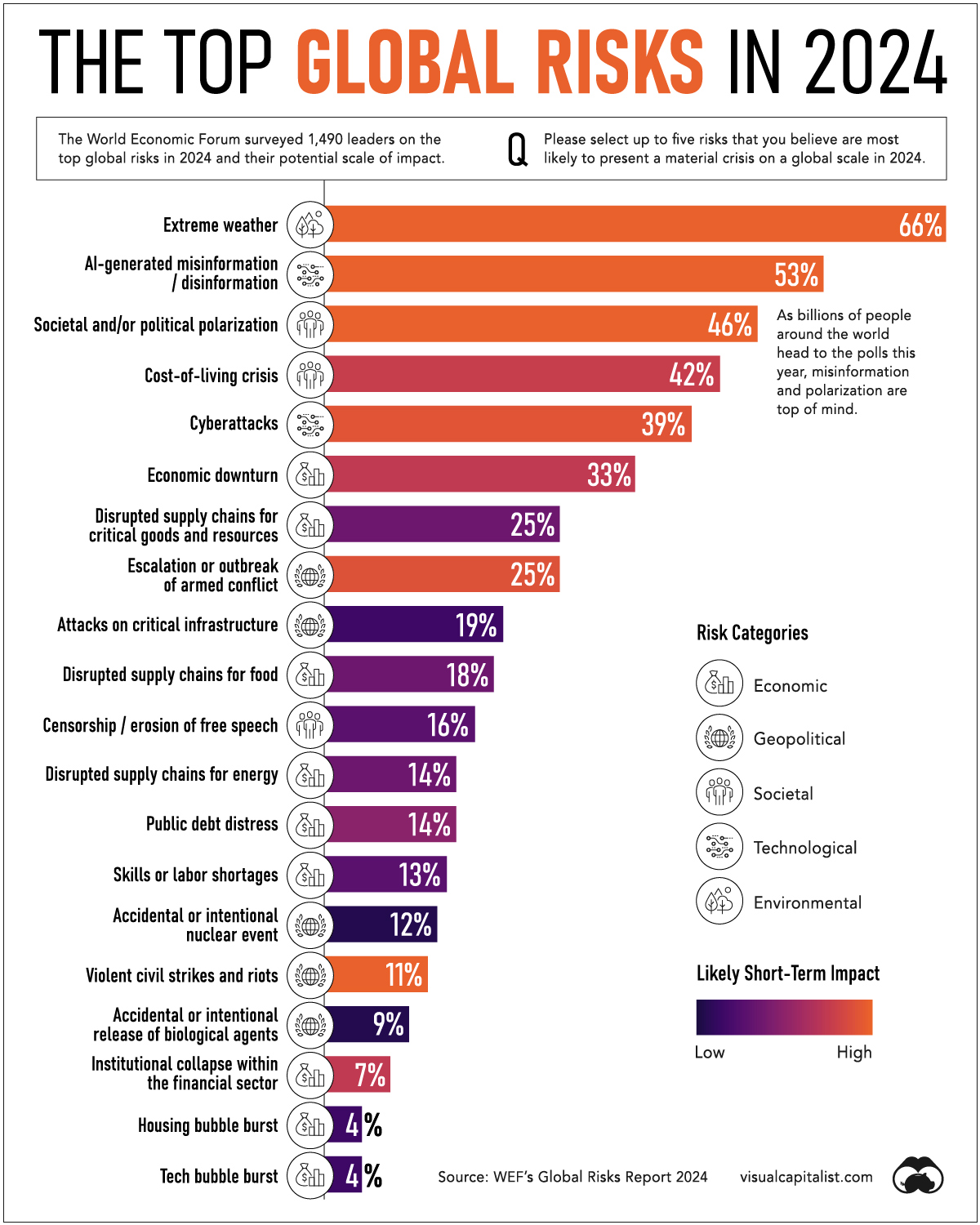
The 2025 WEF report reflects a deepening of risks identified in the 2024 report, with a greater emphasis on their interconnectedness. Climate change and environmental risks remain the most severe, but their urgency has increased due to the accelerating pace of global warming and inadequate adaptation efforts. Economic instability has also become more pronounced, with developing economies like those in SADC facing heightened vulnerability to external shocks.
One notable difference in the 2025 report is the heightened focus on geopolitical fragmentation and its impact on global cooperation. The report warns that rising tensions between major powers could undermine efforts to address shared challenges like climate change and poverty. For Africa, this fragmentation poses a significant risk, as it could limit access to development finance and technology transfer.
Another key difference is the growing emphasis on technological risks, particularly the societal impacts of AI and cybersecurity threats. While the 2024 report highlighted these issues, the 2025 report underscores their rapid evolution and the need for proactive regulation and governance.

Conclusion
The WEF’s 2025 Global Risks Report paints a sobering picture of the challenges facing the world, particularly in regions like SADC and Africa. The interconnected nature of these risks underscores the need for holistic and coordinated responses at the regional and global levels. By prioritizing climate action, economic reform, and regional integration, SADC countries can build resilience and chart a path toward a more prosperous future. However, this will require bold leadership, increased investment, and a commitment to multilateralism in an increasingly fragmented world.
As Africa continues to navigate these complex risks, the lessons from the WEF report must inform policies and strategies at all levels. Only by addressing these challenges head-on can the continent unlock its potential and ensure a sustainable and inclusive future for its people.