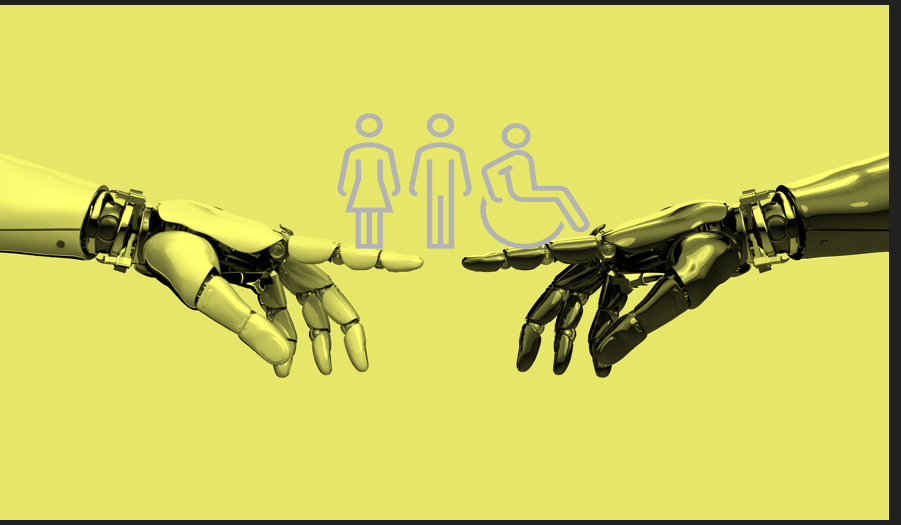
As Silicon Valley’s race for Artificial General Intelligence (AGI) and quantum supremacy intensifies, the world finds itself at a crossroads. The rapid advancements led by titans like Sam Altman and Elon Musk promise transformative solutions but also present risks of deepening societal inequalities and ethical dilemmas. Hard tech innovations are powerful, yet their long-term impact depends on how well they align with societal needs and values. This makes the integration of social innovation—a novel approach to addressing systemic challenges—imperative in crafting a sustainable, equitable future.
Defining Social Innovation in the Age of Disruption
Stanford Graduate School of Business describes social innovation as “a novel solution to a social problem that is more effective, efficient, sustainable, or just than existing solutions, with value primarily accruing to society as a whole rather than private individuals.” This approach calls for collaboration across sectors—business, government, and civil society—to create systemic solutions. Social innovation emphasizes inclusivity and sustainability, ensuring that technological advancements benefit society as a whole.
In the context of AGI and quantum computing, social innovation offers a guiding framework for addressing the societal challenges arising from these technologies. For example, while AGI holds the promise of revolutionizing industries like healthcare and education, its deployment must be carefully managed to prevent exacerbating inequalities. Programs like OpenAI’s focus on “aligned AGI” could incorporate principles of social innovation to ensure these technologies address broader societal values rather than being narrowly profit-driven
Stanford Graduate School of Business
Hard Tech’s Promise and Peril
Hard tech advancements have the potential to solve some of humanity’s most pressing problems. Quantum computing, for instance, could optimize global supply chains, revolutionize drug discovery, and even enable breakthroughs in climate modeling. Similarly, AGI promises unprecedented efficiency in problem-solving, from automating mundane tasks to providing real-time analysis for complex decision-making.
Yet, these technologies are not without significant risks. Elon Musk has warned of AGI’s potential to cause “irreversible harm” if misaligned with human values. Meanwhile, Sam Altman has highlighted the need for careful regulation and governance, describing AGI development as a challenge comparable to nuclear weapons control. Without frameworks like social innovation to guide these advancements, hard tech could lead to societal disruptions such as widespread unemployment, privacy erosion, and geopolitical instability
The Social Innovation Solution

Social innovation bridges the gap between technological progress and societal equity. By applying human-centered design and systemic thinking, it can ensure that the benefits of hard tech are equitably distributed. For example:
- Workforce Reskilling: Automation driven by AGI threatens millions of jobs globally, with studies estimating that up to 47% of U.S. jobs are at risk of computerization. Social innovation initiatives, such as Germany’s “Alliance for Jobs,” bring together stakeholders to transition displaced workers into new roles. Applying similar models globally could mitigate the risks of workforce obsolescence.https://www.researchgate.net/publication/271523899_The_Future_of_Employment_How_Susceptible_Are_Jobs_to_Computerisation
- Digital Equity: Quantum computing, though promising, risks leaving developing regions behind. Social innovation could focus on building affordable digital infrastructure and providing education to bridge this gap. India’s Digital India campaign is a successful example of using policy to address digital divides. https://www.visionofhumanity.org/digital-india-bridging-the-divide-in-the-worlds-largest-democracy/
- Ethical AI Development: The ethical challenges surrounding AGI, such as bias in algorithms and misuse of AI tools, can be addressed through social innovation. Participatory policymaking, like Ireland’s citizen assemblies, could help create inclusive governance frameworks for AI.
Challenges Facing Tech Developers
The race to dominate AGI and quantum computing has created a “race to the bottom” in areas such as labor practices, environmental standards, and cost-cutting. For instance, companies prioritize speed-to-market over ethical considerations, leading to questions about data privacy, algorithmic bias, and environmental sustainability. Without accountability, these challenges could erode public trust and lead to regulatory backlash. Read further Tech Developer’s Social Dilemma or Race to the Bottom
Social innovation provides a roadmap for addressing these challenges. By fostering collaboration between stakeholders, it can create shared value that benefits both the private sector and society. This approach encourages tech developers to adopt sustainable practices, such as considering energy and other natural resource requirements in quantum computing operations as well as prioritizing ethical considerations in AI development.
Real-World Applications
The integration of social innovation with hard tech is already yielding results in certain areas. For example, AGI tools are being used to tackle climate change by optimizing renewable energy systems and predicting environmental risks. Similarly, social entrepreneurs are leveraging AI to address educational disparities, such as creating personalized learning platforms for underserved communities. These applications demonstrate the potential of social innovation to guide hard tech toward solving real-world problems
Stanford Graduate School of Business.
By creating meeting points between hard technologies and social innovation, we can bridge the gap between industry-driven progress and technology that truly serves humanity’s needs, ensuring that emerging technologies uplift communities, promote equity, and address the ethical and societal challenges of the 21st century.
Reference
https://www.gsb.stanford.edu/experience/about/centers-institutes/csi/defining-social-innovation